Understanding how people and intelligent systems work together.
Using design thinking as a method of inquiry, I am curious about how experts understand, coordinate with, and adapt alongside intelligent systems in safety-critical systems. Drawing on cognitive psychology, human factors, and systems design engineering, I hope to develop models, prototypes, and simulations to investigate the dynamics of human performance and human–systems integration within this context.
Research through Design × Human–System IntegrationBased in the United Kingdom
01 /
PROJECTS & RESEARCH
Experimental infrastructure
FLIDIS
Flight Deck Interaction Simulator
A browser-based experimental environment for investigating how people manage concurrent tasks. FLIDIS combines continuous manual control with multimodal secondary tasks, bringing together control measures, interaction events, and participant reports to examine task interference and behavioural strategies.
Inquiry through design: Configurable tasks and modalities make alternative interaction arrangements tangible and comparable, creating a way to investigate how design choices shape concurrent activity.
Multimodal interaction
Dual-task research
Simulation
Public release in preparation
Outputs & engagement
ICMI 2026 / Demonstration / Published
FLIDIS: An Experimental Infrastructure for Dual-Task Research in Continuous Control and Multimodal Interaction
Charles Njoku & James Blundell
28th ACM International Conference on Multimodal Interaction · Napoli, Italy · October 2026
Measuring visual attention in context. AREA aligns gaze with task events from AR headsets and desktop eye trackers, with tools for heatmaps, fixation measures, and areas-of-interest analysis to examine how attention unfolds during an activity.
Inquiry through design: Bringing gaze, task context, and analysis together creates a basis for exploring how choices about representing attention shape what researchers can observe and interpret.
An airport ground-traffic simulation for studying automation trust and decision-making during conflict scenarios.
Proposed research question: How do automation reliability, conflict demands, and interaction history shape verification, decisions, and intervention?
Planned design exploration: Develop and iterate conflict scenarios and automation behaviours to make different conditions of human–automation coordination available for study.
Coming soon
Cross-feed
A Multiple Resource Allocator and workload management layer for a simulated adaptive flight deck interface.
Proposed research question: When does automated resource allocation support human performance, and how does it affect awareness, control, and recovery?
Planned design exploration: Prototype alternative resource-allocation strategies and feedback arrangements, then use their behaviour and participants’ experiences to refine both the design and the research question.
02 /
INTERESTS
How does collaboration between experts and intelligent systems develop, break down, and recover?
I want to understand how experts in safety-critical domains interact with an AI teammate in single-flow tasks and across complete workflows. My questions concern dynamics such as trust and shared control, especially when demands change, information is incomplete, or the consequences of failure are significant.
Through design and experimental inquiry, I aim to develop models, evaluation methods, and research environments that help explain human performance and inform safer, more effective human–systems integration.
I.
Human–AI Teaming
Modeling patterns of coordination between experts and AI teammates through dyadic interactions to understand what factors might help formulate the safest-performing pair.
II.
Representation
Interfaces, techniques, and interactive systems that help explain how experts and AI teammates anticipate system state, interpret context, and coordinate action.
III.
Human Performance
Metrics and measures to explore workload management and whether adaptation supports effective performance, conceals emerging difficulties or enables recovery.
Open to research associate and PhD positions
Good questions deserve a conversation.
My long-term ambition is to become a researcher and experimental scientist specialising in human–systems integration in complex and safety-critical environments. I’m seeking doctoral training that will deepen my theoretical understanding and experimental expertise, and welcome conversations about research associate and PhD opportunities in this area.
I spent the last eight years as a UX Designer and Product Manager leading digital products and services across financial services, healthcare, and enterprise software. Along the way, I co-founded Spire, a UX research and product testing startup, and raised $100k in pre-seed funding. I also helped lead early-stage growth at startups in Nigeria, the US, and the UK, collectively contributing to over $7.5m in venture capital backing. My work was recognised through the UK’s Global Talent route, with endorsement as an Exceptional Talent in Digital Technology.
My time in industry gave me opportunities to build, lead, and see how design shapes people’s everyday experiences. It also left me curious, and with questions I wanted more time and deeper knowledge to explore.
In August 2026, I completed my MSc in Safety & Human Factors in Aviation at Cranfield University, where I developed FLIDIS for my research project, supervised by Dr James Blundell and mentored by Dr Wen-Chin Li. My experience at Cranfield renewed my enthusiasm for research.
I believe design and design thinking offer an accessible way to explore the future of collaboration between humans and intelligent systems, because they offer tools and methods for representing the most tangible aspects of human-AI interaction. Making an idea or concept tangible provides something to experience, question, and shape. Through Research through Design (RtD), I want to bring that openness together with rigorous experimentation in developing knowledge about how people and intelligent systems can work together in complex and safety-critical systems.
METHODS
Designing to understand. Making to ask better questions.
I approach my curiosities using a Research through Design (RtD) process. I develop artefacts that make ideas about human–system relationships tangible and open to investigation. Making, studying, and revising them helps me question assumptions and discover possibilities. The artefacts I develop give research questions a form that can be experienced, examined, and revised. Human-in-the-loop experiments help me investigate how changes in system behaviour, task demands, and coordination arrangements affect performance, adaptation, and recovery.
01Framing & Desk Research
Bringing theories of cognition and behaviour together with existing evidence and context. Framing an initial question, then revisiting it as designing reveals new considerations.
02Exploratory Design & Prototyping
Thinking through sketches, low-fidelity prototypes, and alternative designs. Making ideas tangible helps expose assumptions, explore possibilities, and discover questions that emerge through the work.
03Modeling & Simulation
Giving ideas executable form through computational models and high-fidelity web and VR environments. Representing tasks, system behaviour, and feedback makes relationships and consequences open to investigation.
04Experimental Design & Human-in-the-loop Studies
Studying how people experience and act within the environments I create. Controlled tasks, eye tracking, interaction logs, performance measures, and participant accounts help investigate both design possibilities and their consequences.
05Analysis & Reflection
Examining behavioural evidence through statistical analysis, temporal modelling, and visualisation, alongside design decisions and participant accounts. Reflecting on surprises, limitations, and unsuccessful approaches to guide the next iteration.
06Synthesis & Sharing
Articulating what was learned through the artefacts and their development: insights, design rationale, and questions for further inquiry. Sharing reusable tools and documenting the conditions and limits of what they reveal.
These activities form a recurring cycle: what I learn through making, use, and reflection can reshape both the artefact and the research question. I aim to share reusable tools alongside design rationale, limitations, and insights that others can examine and build on.
04 /
BEYOND RESEARCH
Miles, people, and things that matter.
Away from research, I make time for running, raising money for causes I care about, and sharing what I’ve learned with design and tech communities.
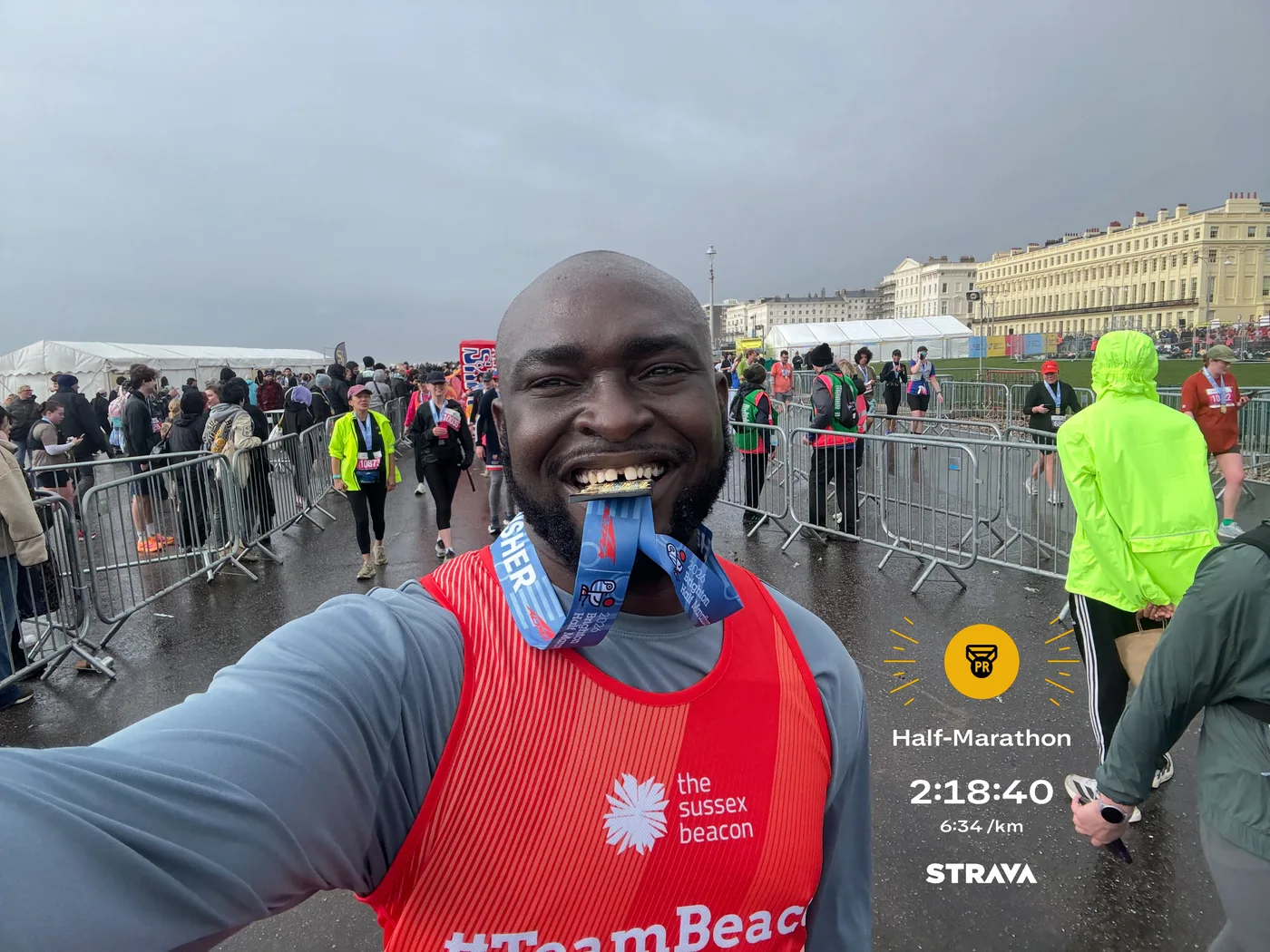
A finish line, a medal, and a cause worth running for.
Running & fundraising
One foot in front of the other.
I took up running in 2025. It became a way to reset, challenge myself, and turn a personal goal into something that helps other people.
From evening races to half-marathon finish lines, I run to support heart research, HIV care, and children’s safety.
Evenings on the move.Good spirits, whatever the weather.Another mile, another reason to smile.
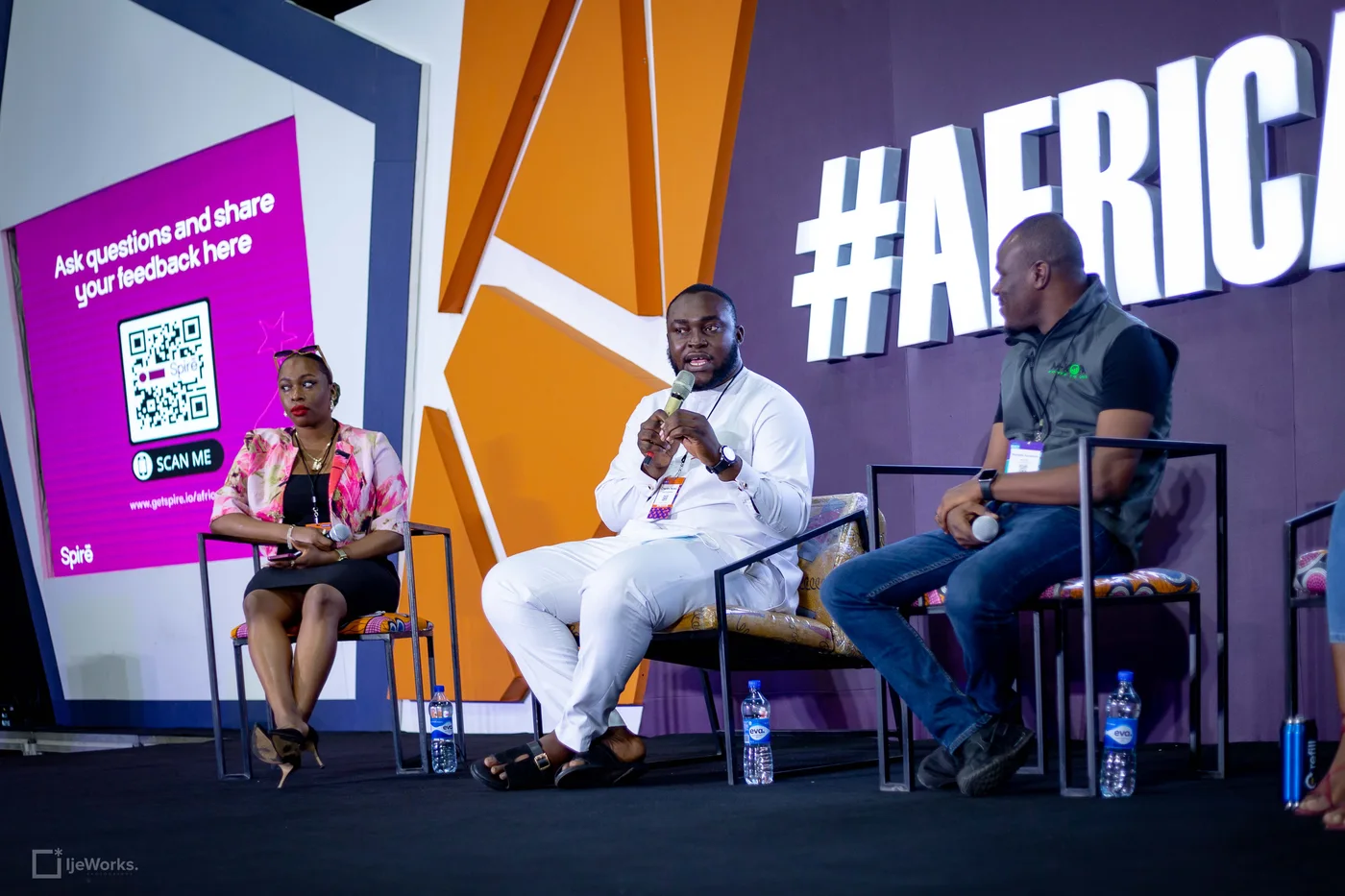
Speaking, community & mentorship
Learning is better when it’s shared.
I’ve been part of design and tech communities throughout my career. I enjoy conversations that connect practice with new ideas, whether on a panel, in a workshop, or one-to-one.
I also mentor early-career designers and founders where I can. Sharing the lessons, questions, and occasional wrong turns is part of the work.

 Based in the United Kingdom